Goldfish
Growth Diary of Kingyo, Japanese Goldfish
Kingyo is one of the symbols of the town.
But did you know that baby goldfish are not born red?
Then how and when will they grow like the ones we know?
Caring for goldfish by changing their ponds as they grow.
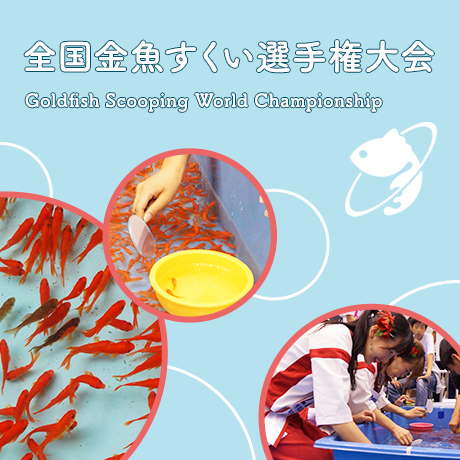
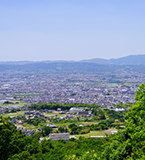
Yamatokoriyama has a long history of goldfish breeding. Holding nearly one hundred goldfish breeding farms, the city has the largest production in Japan. Greenish breeding ponds expanding into the suburbs are the setting in which they are raised.
Goldfish regularly spawn in spring. During this spawning period, water plants for nesting are placed in a special breeding pond where parent fish are put together. To protect the eggs from being eaten by other goldfish, the egg-laden water plants are transferred to a special incubation pond called "tataki". Eggs will generally hatch in as early as 3 to 7 days. Baby goldfish begin to swim several days after hatching, and in about a week they reach approximately 1cm in length. At this stage, they have blackish bodies, showing not a hint of their particular red color.
In about a month, the black color begins to change into a light reddish color, distinctive of goldfish, while they grow up to 1.5 to 2cm in length. In order to maintain their health, special precautions are always taken, keeping them free of diseases, feeding them properly in the early morning, and above all providing the best water conditions.
Wakin goldfish, used exclusively in the goldfish scooping game, are known as “Koaka.” They are shipped at the length of 2 to 3cm. They hatch in April and will be sent across Japan from the end of June, resulting in shipping some 500 thousand per day in the summer seasons. Each plastic bag containing water has enough oxygen for 500 Koaka in summer and 1,000 in winter. The bags are packed inside cardboard cartons to be shipped throughout the country. In this way, Koaka goldfish appear at the goldfish scooping game.
Highly regarded fancy “Ranchu,” referred to as the “king of goldfish,” incubate at their own special hatchery where live food such as water fleas are supplied to the fry. After several screening stages, only the fish with the best characteristics remain.
![]() | Baby Ranchu When they are born they are black in color, but there is something "Ranchu" in their image. |
![]() | Water Flea or Daphnia Harvest Catching water fleas was a familiar scene until the early 70’s, but today it is almost nowhere to be seen. |
![]() | Spawning Scene Laying eggs on the water plant. Eggs are removed to a special hatchery to protect them from being eaten by other goldfish. |